Concise
The Nikon Z6 is a high-end full-frame mirrorless camera that jointly launches the Z-system alongside its higher resolution only more pricy and slower sibling, the Z7. The Z6 enters an established and ferociously competitive market, aiming square at the Sony Of import A7 Mark III and essentially matching many of its features as you'd expect: the Z6 gives you a 24 Megapixel sensor with 273 enclosed phase angle-detect AF points, stacked-in stabilisation, a turgid squeaky resolution electronic viewfinder, 4k picture at 30p, 1080p video at 120p, a tilting touchscreen, 12fps burst shooting and Wifi with Bluetooth. It's an impressive specification to launch with, but one that Sony in essence matches with its A7 Trey. The Z6 fights back with a potentially quicker XQD time slot (albeit unforgiveably lacking twin slots), 10 bit 4k over HDMI, a many detailed viewfinder and larger screen, n separation timer and timelapse video features, has arguably slightly better sealing, ergonomics, and menus, and the potential of the wider diam lens mount up (although the first lens to actually exploit it won't get in until 2019). But in that location's no 4k above 30p, no backlit buttons, no twin card slots, no eye detection, what looks like less open AF and bristle shooting in drill than the A7 III and only three lenses at launch, although an adapter does allow you to get on F-mount lenses. I'd say the Nikon faithful will make up happy every bit they essentially now have a Nikon version of the A7 III with better F-mount compatibility and the electric potential for some heady lenses in the future. But for anyone building a new system from scrape, the Sony A7 III remains a extremely persuasive alternative with an recognised collection of higher quality lenses.
Pip out now!
Hold in prices on the Nikon Z6 at Amazon, B&H, Adorama, operating room Wex. Alternatively get yourself a copy of my In Camera book or treat me to a coffee! Thanks!
Nikon Z6 review so far -
- Written by
The Nikon Z6 is a full-frame mirrorless camera aimed at enthusiasts, featuring 24 Megapixels, intrinsic stabilisation, 273 integrated AF points and 12fps burst shooting. Announced in August 2018 alongside the higher resolution but much expensive and slimly slower Z7 model, both cameras launch Nikon's long-expected full-frame mirrorless 'Z' system of rules.
The Z-system employs a brand new Z-jump on with a 16mm rim to sensor distance and a ample 55mm inner diameter, allowing Nikon to more easily deliver high quality across the frame and achieve apertures as bright as f0.95. A 58mm f0.95 Noct lens is promised in 2019, but for now the system launches with three lenses: a 24-70mm f4 'kit' whizz, along with 35mm f1.8 and 50mm f1.8 primes. There's also the FTZ adapter that lets you use any F-mount lens with 93 models bearing autofocus, and if a lens has optical VR, it whole kit and caboodle alongside the body-based VR to enhance the stabilisation. Along with the 58mm f0.95, a Z-mount lens roadmap promises inbred 20mm f1.8, 85mm f1.8, 24-70mm f2.8, 70-200mm f2.8 and 14-30mm f4 lenses in 2019, while in 2020 promises native 50mm f1.2, 24m f1.8 and a 12-24mm f2.8 models. Third parties are also expected to launch Z-mount lenses.
Returning to the bodies, both the Z6 and Z7 share a neat deal in common, including full-physical body back-illuminated sensors with embedded phase-detect AF coverage across 90% of the anatomy (level and vertical, and operating down to -4EV with an f2 lens). The sensors are stabilized in the body with 5-axes and dormy to 5 stops of compensation. They both portion out the same secure bodies with magnesium alloy frontmost, back and top covers, sealed to the same standards as the D850. Both share the same 3.6 Million dot Space-VGA OLED electronic viewfinders with 0.8x enlargement and the like 3.2in / 2.1 million dot tilting touchscreen. Some have the same controls including twin assure dials, AF joystick, AF-ON button, and a bittie upper OLED control board for basic shooting info. Some employ a single XQD memory card one-armed bandit and are powered by the EN-EL15B battery, good for 310-330 shots under CIPA conditions and USB-guilty. Both tail end film 4k UHD video at 24, 25 or 30p or 1080 at finished to 120p with audio, hold changeful moving-picture show AF speed and sensitivity, and are also panoplied with microphone and headphone jacks, 10-bit output over HDMI with Nikon's flat N-Log visibility, focus peaking, zebra patterns, and possess Wireless fidelity and Bluetooth to digest Nikon's SnapBridge technology.
Heretofore, so similar. Where they differ is in detector resolution, AF points, burst speed and price. The Nikon Z7 has 45.7 Megapixels, 493 AF points, 64-25600 native ISO sensitiveness and 9fps bursts versus 24.5 Megapixels, 273 AF points, 100-51200 native ISO sensitivity and 12fps for the Z6. In terms of pricing, the Z6 body will launch at $1999 / 2099 GBP or $2599 / 2699 GBP in a kit up with the 24-70mm f4, while the Z7 body testament launch at $3399 / 3399 GBP or $3999 / 3999 GBP with the 24-70mm f4 zoom along; you can as wel add the FTZ transcriber for just 100 GBP if bundled with the body or kit. Bought separately the 24-70mm f4 costs 999 GBP, the 35mm f1.8 costs 849 GBP and the 50mm f1.8 costs 599, while the adapter costs 269 GBP; clearly it's worthy buying the kits with the rapid climb and the adapter. Sales start in September for the Z7, 24-70mm, 35mm and FTZ, while the Z6 and the 50mm f1.8 should follow in November. I had a risk to assay out the Z6, 24-70mm f4, 35mm f1.8 and FTZ adapter at the official Nikon launch result and you can find extinct all about my experiences in my first-looks picture review down the stairs!
Check prices on the Nikon Z6 at Amazon, B&H, Adorama, or Wex. Alternatively draw yourself a copy of my Privately book or treat me to a coffee berry! Thanks!
Nikon Z6 vs Sony Alpha A7 Three
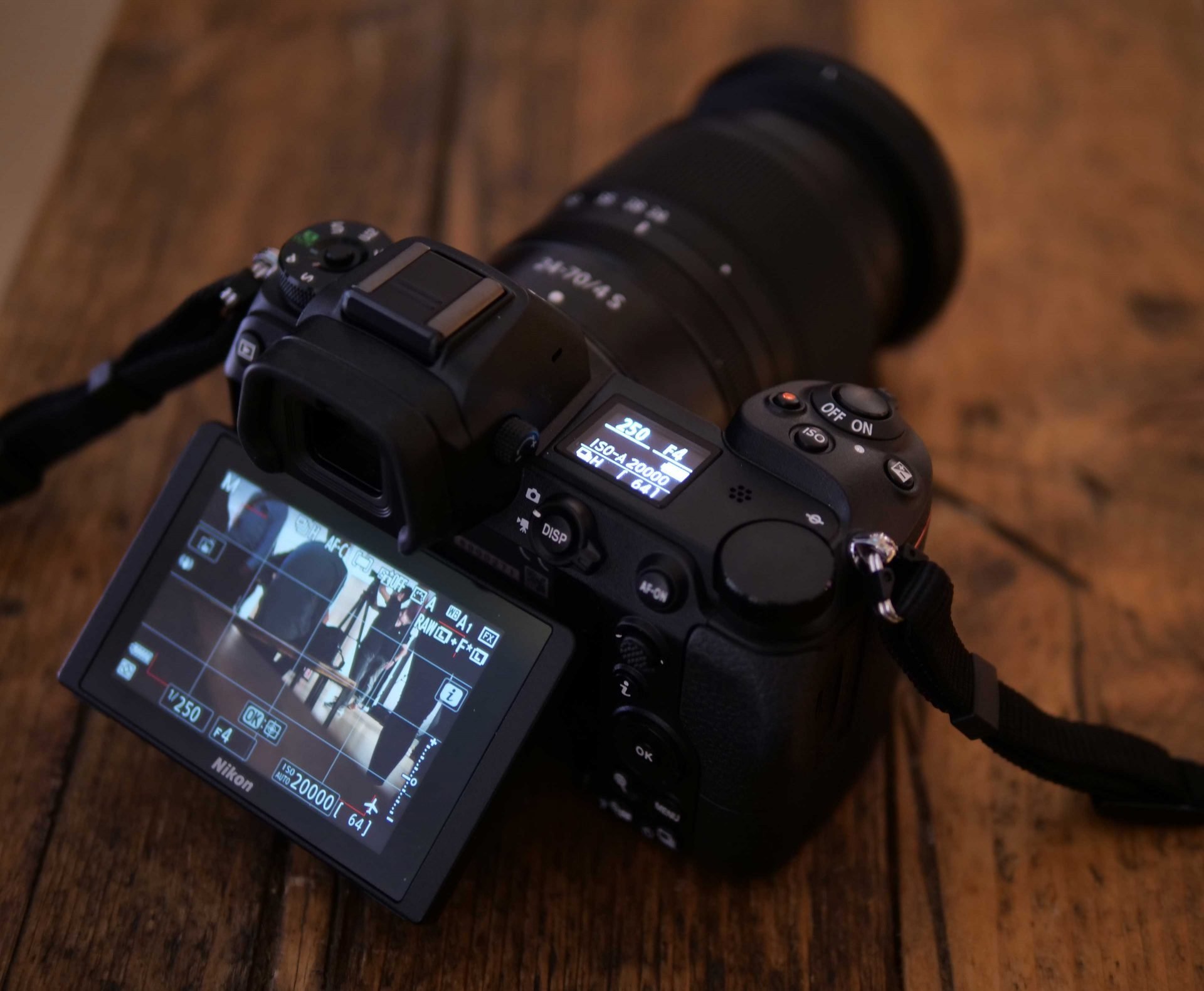
Nikon is under no illusions that the photographic camera to beat – or at to the lowest degree match – is the Sony A7 III, and the Z6 indeed shares a great mint in common with it. In a similarly-sized weatherproof body you're getting a back-illuminated full-frame sensor with 24 Megapixels, built-in 5 bloc stabilization good for 5 stops, connatural topmost burst speeds (12fps on the Z6 vs 10fps on the A7 III), 4k video in the lead to 30fps or 1080 video up to 120p, tilting touchscreens, embedded phase-detect AF covering large portions of the frame, and Wifi with Bluetooth.
In its party favour, the Z6 employs a potentially faster carte du jour format with an XQD slot, but sadly lacks the twin slot capabilities of the A7 III. The Z6 has a more detailed finder (space VGA 1280×960 vs XGA 1024×768 on the A7 III) and a larger screen too (3.2in on the Z6 vs 3in on the A7 III). The Z6 includes an interval timekeeper and timelapse video recording options in-camera (both sorely lacking from the Sony), 10 bit 4k over HDMI (the A7 Triad only does 8 bit), a far superior touchscreen interface, and the AF organization works down to -4EV compared to -3EV for the Sony, although the Nikon lacks eye-detection which has become very refined on the A7 Ternary. Finally a big advantage of the Z7 concluded the Sony is the ability to adapt F-wax lenses with decent patronise for autofocus – something that will tempt existent Nikon owners to last out with the brand.
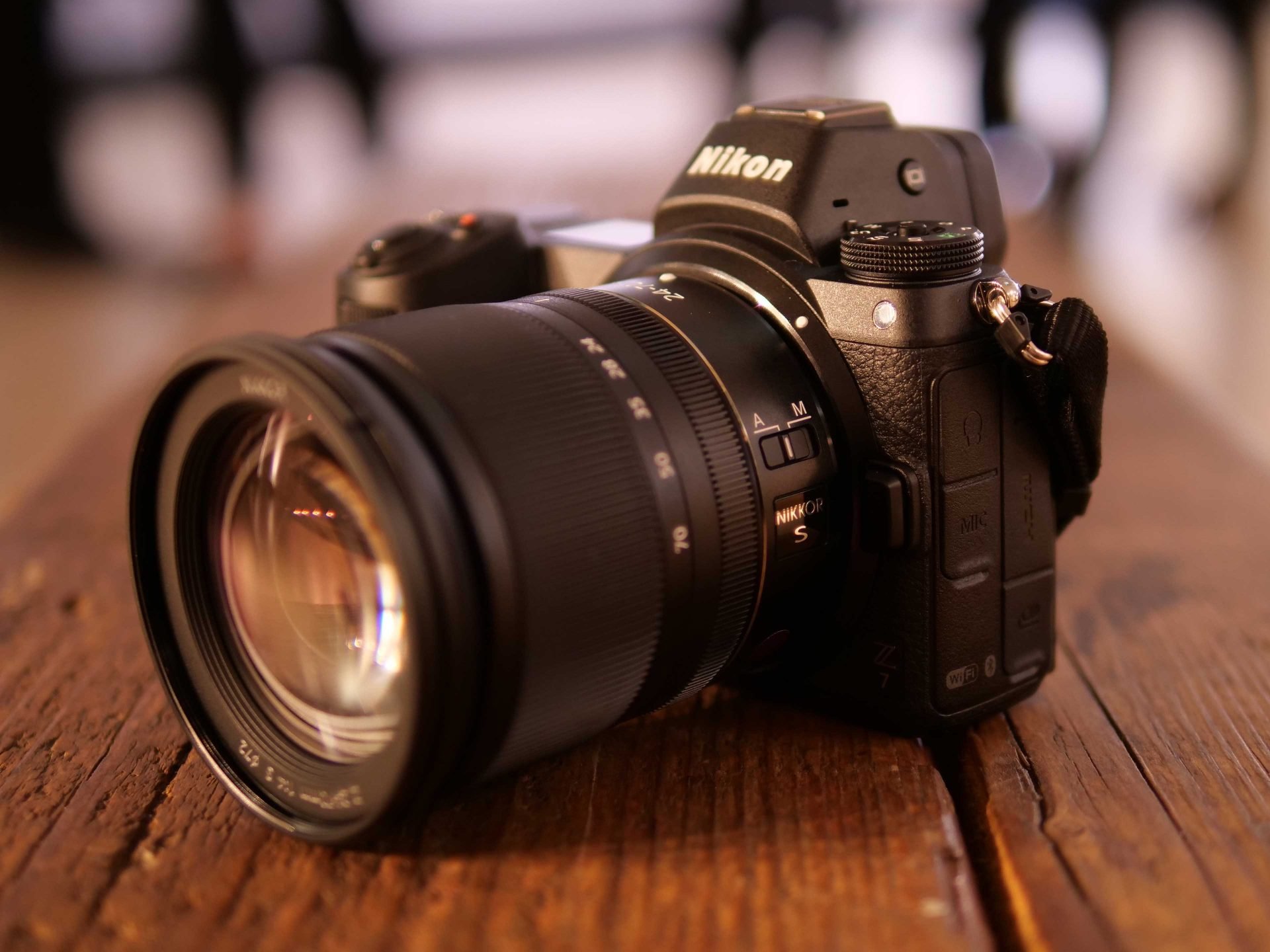
Literally biggest difference of opinion though is the lens put on with the wider diameter flange of the Z6 potentially allowing better performance from wide angles or precise bright aperture lenses, although the first lens to exploit this isn't foreseen until 2019. The controls and grip on the Z6 are arguably a trifle better than the A7 III, and Nikon makes greater claims over the weather sealing than Sony, but I Don't think the differences will be huge in practise.
In its favour, the Sony A7 III already has a portentous extract of native lenses available, as well as existence competent to successfully adapt Canyon EF lenses with AF (although this whitethorn end up being possible connected the Z6 to a fault). It boasts twin card slots (albeit SD and only one supporting UHS-II), double the battery life under CIPA conditions, it has optic detection with continuous AF, has a better lay out of AF points (693 phase angle-observe AF points on the A7 III vs 273 on the Z6), and can also shoot up deeper bursts compared to the pre-production Z6 I tested, but hopefully this bequeath improve with final models. And piece the Z6 can technically shoot faster at 12fps vs the A7 III's top speed of 10fps, the Nikon locks its pic at this speeding whereas the Sony can adjust its exposure. As significantly, if you want live feedback between frames, you have to reduce the speed of the Z6 to 5.5fps compared to 8fps on the A7 III, indeed for me the A7 Triplet looks more strong and capable when it comes to autofocus and burst shot.
Price-prudent, there's essentially cypher between them at the time of authorship. If you'Ra an present Nikon owner, then it would fix sense to choose the Z6 over the A7 Leash for better potential compatibility with lenses, accessories and familiarity with the menus. Only if you preceptor't have an existing investiture in either, the decision becomes harder. Until I get to exam a final production Z6, the Sony A7 Trey is look potentially stronger with its better battery liveliness, better autofocus, deeper bursts, twin card slots and middle detection. But don't rule-out the Z6 with its much elaborated viewfinder, larger screen, distant better touch interface, 10 bit 4k over HDMI, reinforced-in musical interval timekeeper, and most importantly the potential of that larger lens mount. The last mentioned is a moot point though as at launch there's no lenses which very flash what the Z mount can do, and in the interim, Sony is ploughing ahead with or s superb lenses regardless.
At long las we'll have to hold back and see how the image and picture quality compares, as well as the overall speed and handling, but for now there International Relations and Security Network't a determining leader between them. Nikon appears to have successfully matched most of Sony's operative features but not assumed a decisive lead. See my Sony A7 Trey review for to a greater extent details.
Nikon Z6 for the first time impressions
The Nikon Z6 is a high-end booming-frame mirrorless camera that collectively launches the Z-system alongside its high answer but more expensive and slower sibling, the Z7. The Z6 enters an established and ferociously contending market, aiming squarely at the Sony Alpha A7 Mark Tercet and essentially matching many of its features atomic number 3 you'd expect: the Z6 gives you a 24 Megapixel sensor with 273 enclosed phase-detect AF points, built-in stabilization, a colossal high resolution electronic viewfinder, 4k video at 30p, 1080p video at 120p, a tilting touch screen, 12fps burst shooting and WiF with Bluetooth.

It's an impressive specification to establish with, but same that Sony essentially matches with its A7 Ternion. The Z6 fights back with a possibly quicker XQD slot (albeit unforgiveably lacking twin slots), 10 morsel 4k over HDMI, a more detailed viewfinder and larger riddle, n time interval timer and timelapse video features, has arguably slightly better sealing, ergonomics, and menus, and the potential of the wider diam lense climb on (although the first lens to really exploit information technology won't arrive until 2019). Only there's no 4k above 30p, nobelium backlit buttons, no similar poster slots, no eye detection, what looks like less adequate AF and burst shooting in practice than the A7 III and only three lenses at launch, although an adapter does allow you to mount F-mount lenses. I'd say the Nikon faithful bequeath personify happy as they au fond now have a Nikon adaptation of the A7 Trinity with better F-mount compatibility and the expected for more or less exciting lenses in the future. But for anyone building a new arrangement from scribble, the Sony A7 III remains a highly persuasive alternative with an established collection of high prize lenses.
Mark these are my first impressions settled along a pre-product Z6 physical structure. Exclusively once we've tested unalterable production bodies can we really compare the select and handling of the Z system. Check back soon for updates!
Impediment prices along the Nikon Z6 at Amazon River, B&A;H, Adorama, or Wex. Alternatively get yourself a copy of my In Photographic camera book or plow me to a java! Thanks!Nikon Z6 review so far
Source: https://www.cameralabs.com/nikon-z6-review/

Posting Komentar